
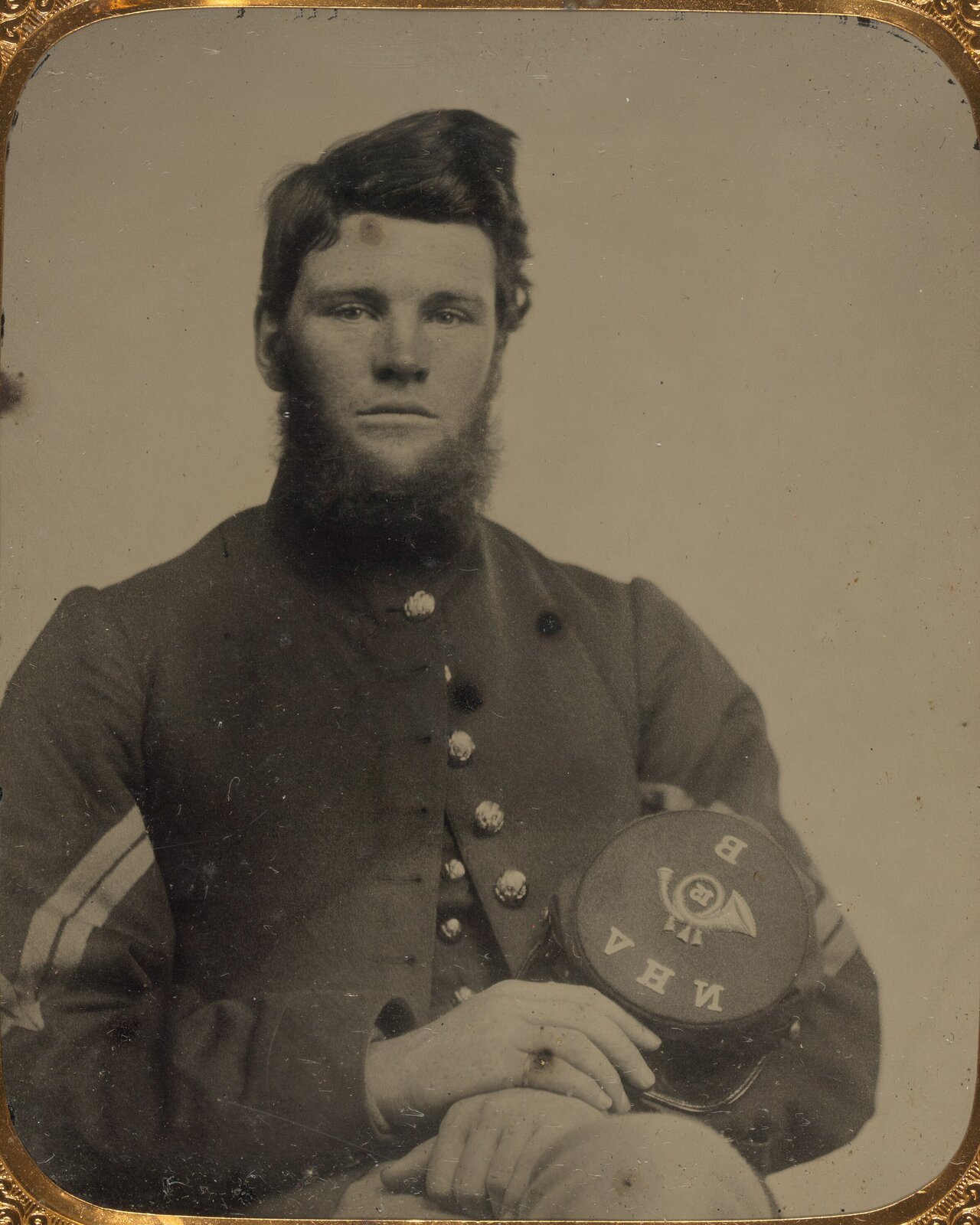
Four details usually place a US uniform photo in its war and branch: the cap, the collar insignia, the buttons and the sleeve. Read them in that order, on the clearest copy you can make, and check every badge against the original scan before you trust it.
Start with any lettering. In the photo at the top, the corporal's cap shows a brass horn with 15 inside it, B above and NHV below, all reading backwards.
Ambrotypes and tintypes came straight out of the camera, so most are mirror images. Flip the scan and the letters give his company and regiment: Company B, 15th New Hampshire Volunteers.
Read the cap, the collar, the buttons, then the sleeve
The cap is often the quickest clue to the war, because its shape changed from one war to the next. From World War I on, small round disks on the collar name the branch.
The coat's cut and its buttons narrow the war and tell the services apart. The sleeve gives the rank, and from the end of World War I on, a patch at the top of the left sleeve names his unit.
A US Army uniform, war by war
Each photo's numbers match its notes: 1 cap, 2 collar, 3 buttons, 4 sleeve. Tap a number to find its note. A hollow number means that detail is out of the frame.
Civil War, 1861 to 1865
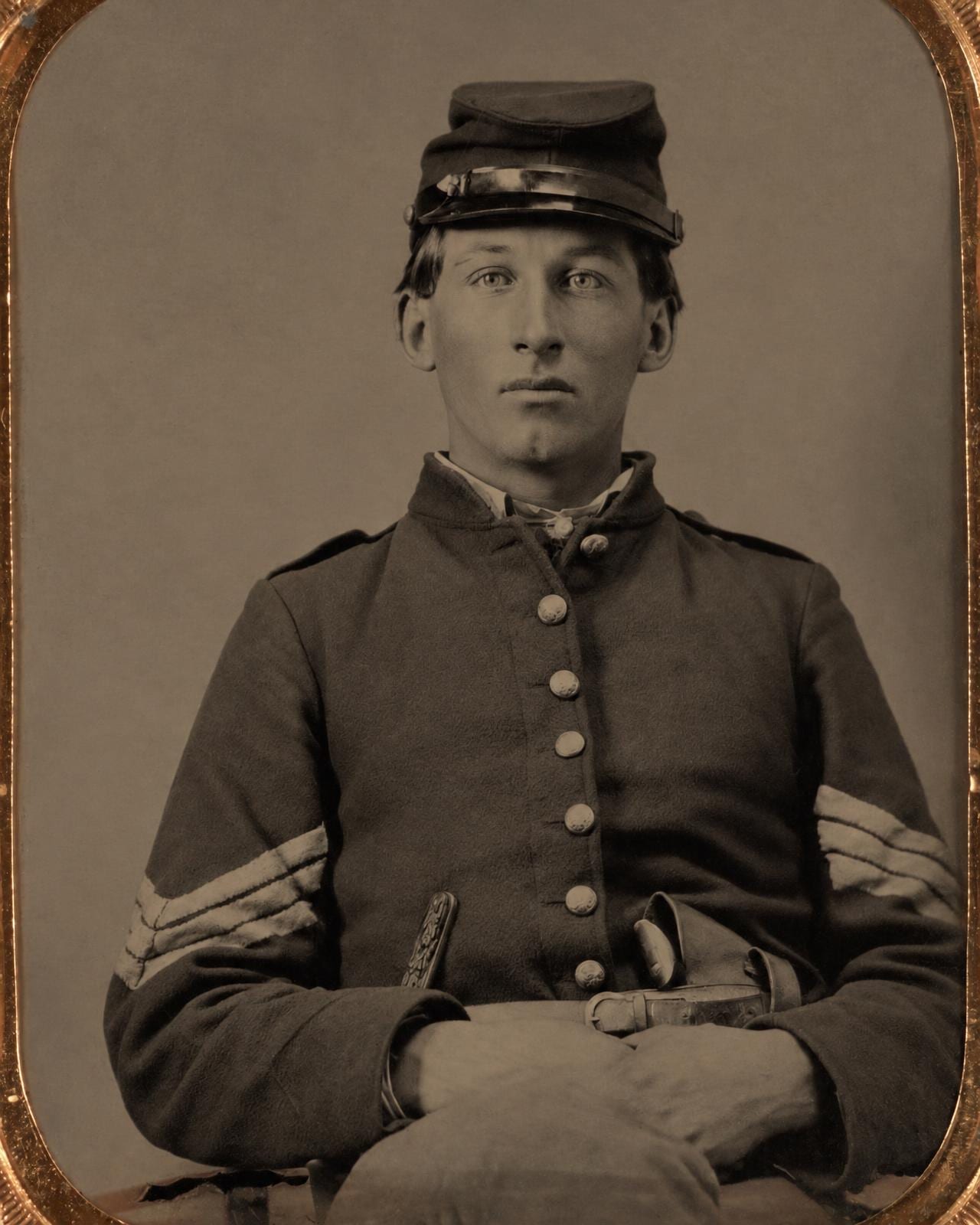
- Cap: A soft forage cap whose crown tips forward. A brass badge, when there is one, names the branch: a horn for infantry, crossed sabers for cavalry, crossed cannons for artillery.
- Collar: A plain standing collar, with no badge on an enlisted coat.
- Buttons: One row of nine brass eagle buttons on the frock coat. The fatigue sack coat has four, a mounted man's short jacket twelve small ones.
- Sleeve: Chevrons point down, on both sleeves. Three make a sergeant, as here.
World War I, 1917 to 1918
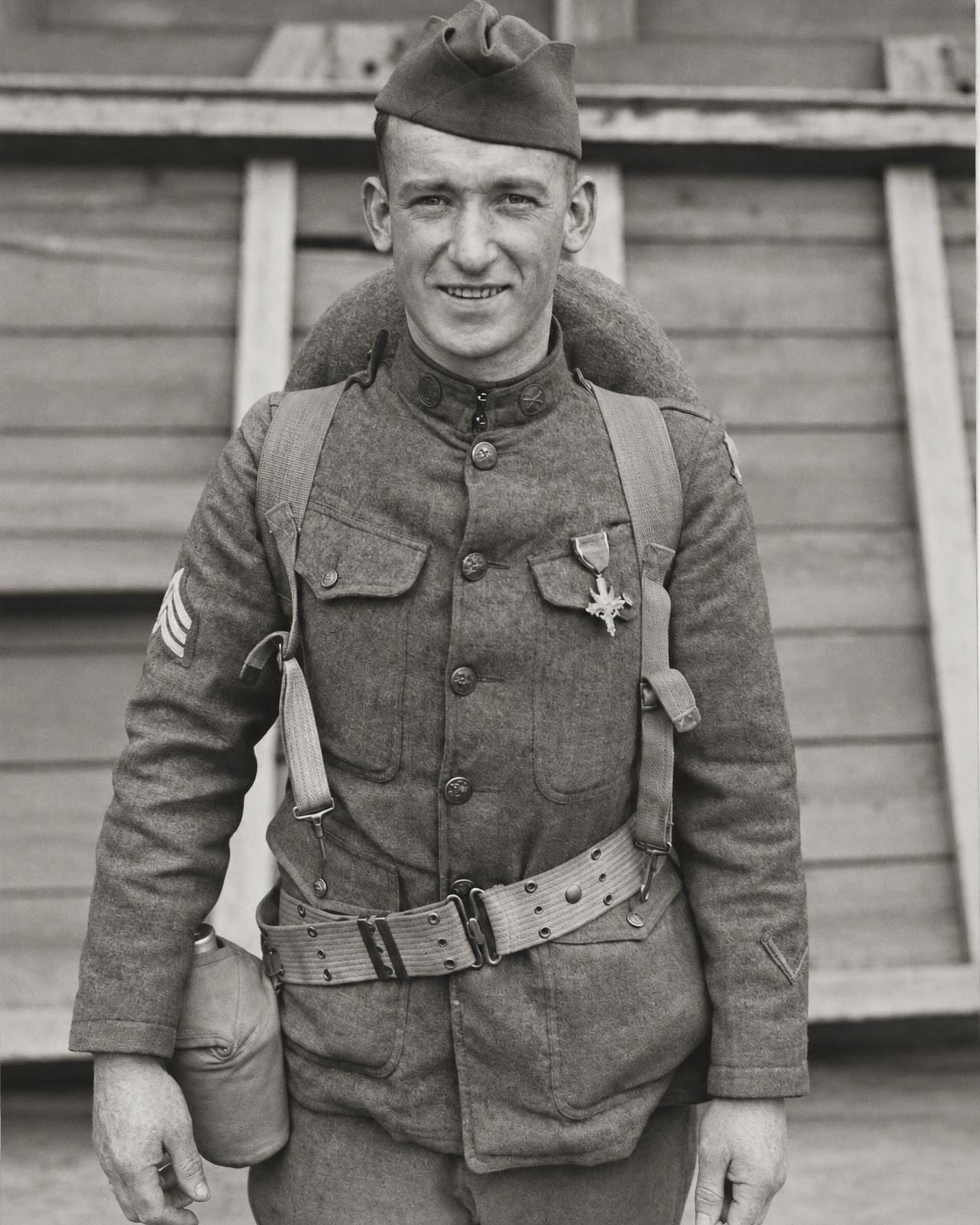
- Cap: The soft overseas cap, worn in France, or the broad campaign hat with a peaked crown.
- Collar: A standing collar with two round bronze disks: “U.S.” on his right, his branch on his left (crossed rifles here).
- Buttons: Five bronze eagle buttons down the front.
- Sleeve: Chevrons now point up. A small gold V low on the left sleeve marks six months overseas; on the right sleeve it marks a wound.
World War II, 1941 to 1945
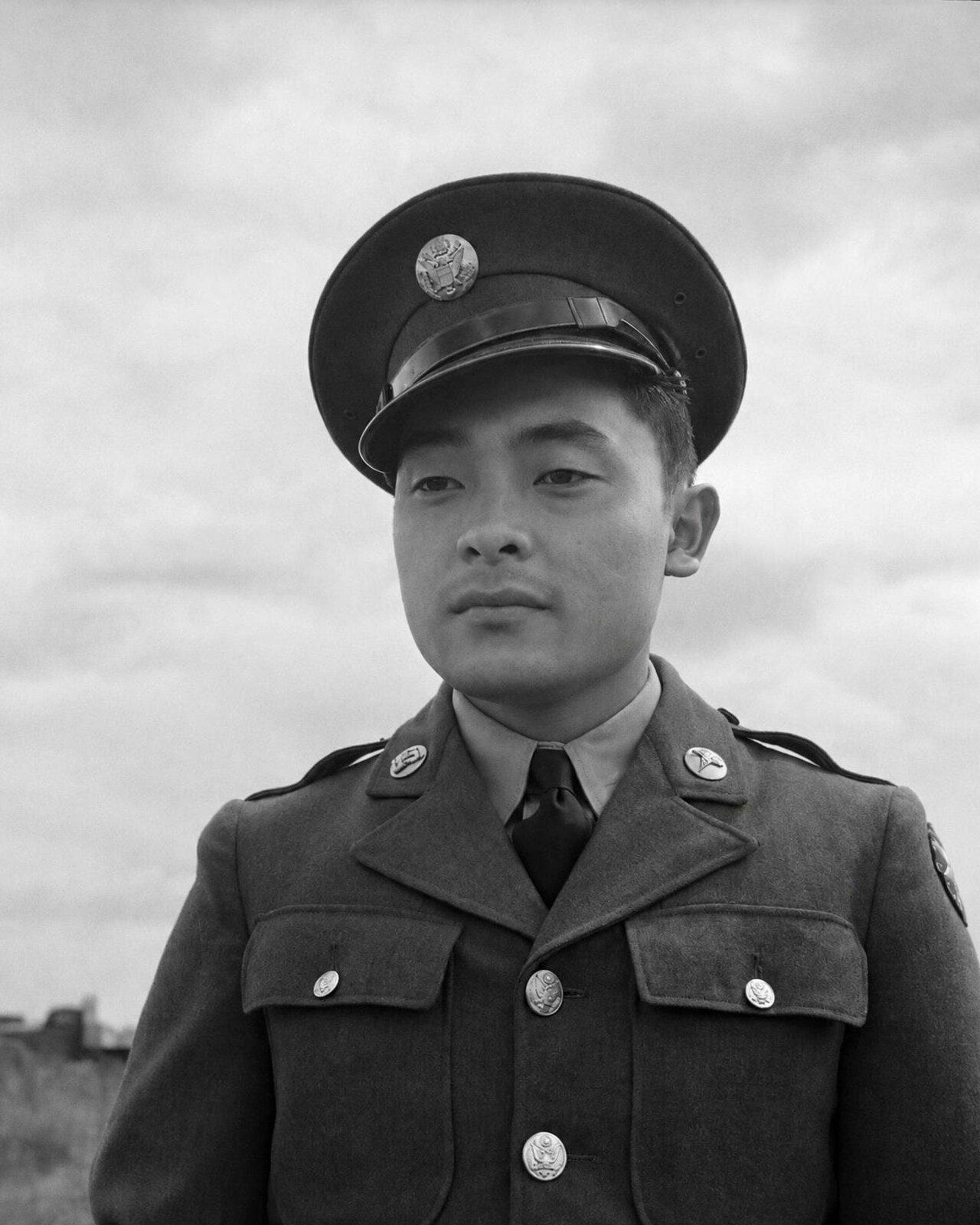
- Cap: A visor service cap or the folding garrison cap. The eagle on a round disk is an enlisted man's; an officer's eagle has no disk.
- Collar: An open collar. An enlisted man wears “U.S.” on his right and his branch on his left, here the caduceus of the Medical Department. An officer wears “U.S.” on both collars and his branch on both lapels.
- Buttons: Four eagle buttons down the front, plus one on each pocket.
- Sleeve: His unit's patch on the left shoulder, seen edge-on. No chevrons in view, so most likely a private.
Korean War, 1950 to 1953
A Korea photo often looks like a late-WWII one: the Army wore the same caps, coats and badges.
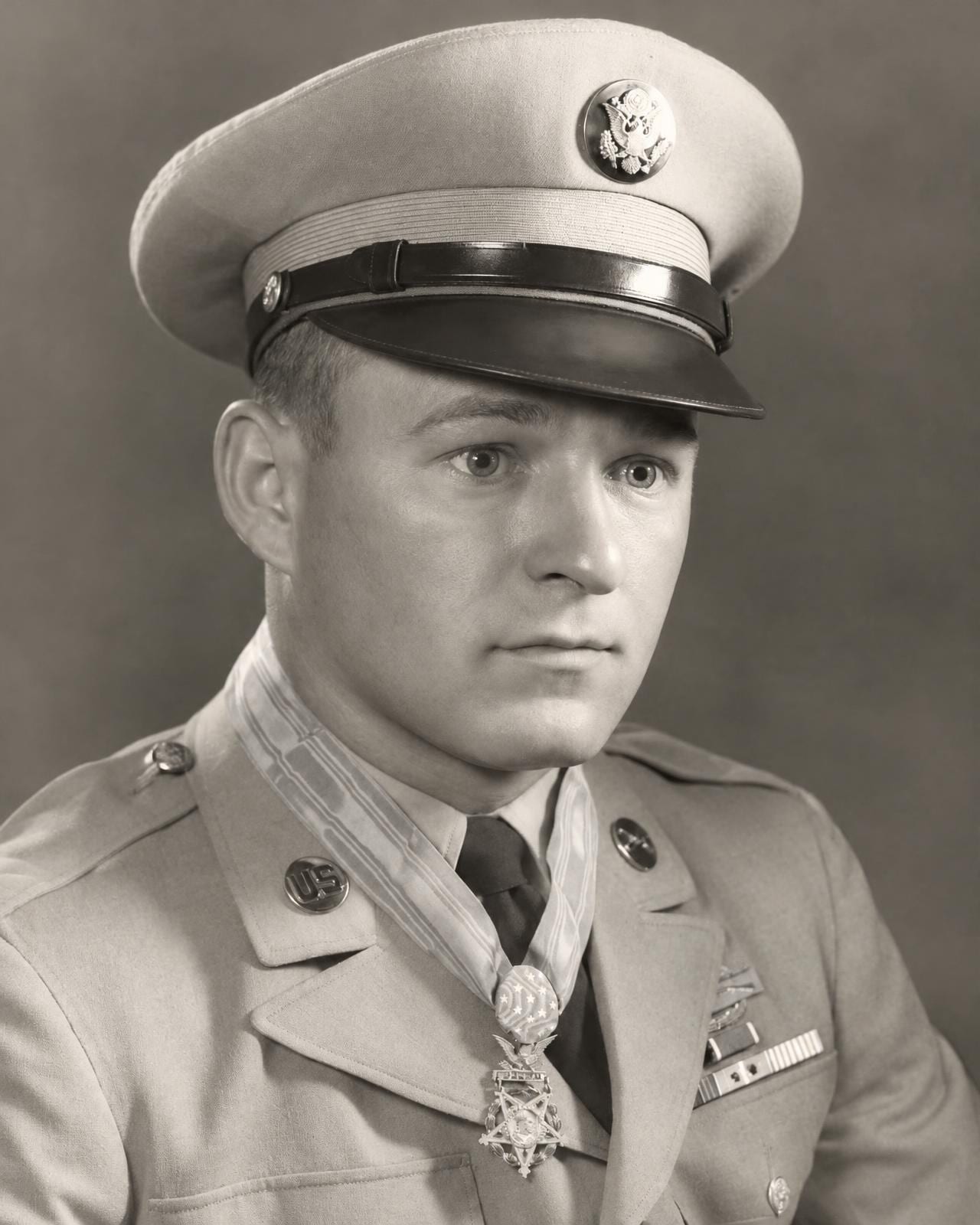
- Cap: The same enlisted eagle on a disk, here on the light summer cap.
- Collar: “U.S.” on his right collar. His branch disk on the left is too soft in this print to read, so it stays unknown.
- Buttons: Brass eagle buttons, here on the shoulder strap.
- Sleeve: The sleeve is out of the frame here. Chevrons worn from 1948 to early 1951 are small and narrow.
Vietnam War, 1960s and early 1970s
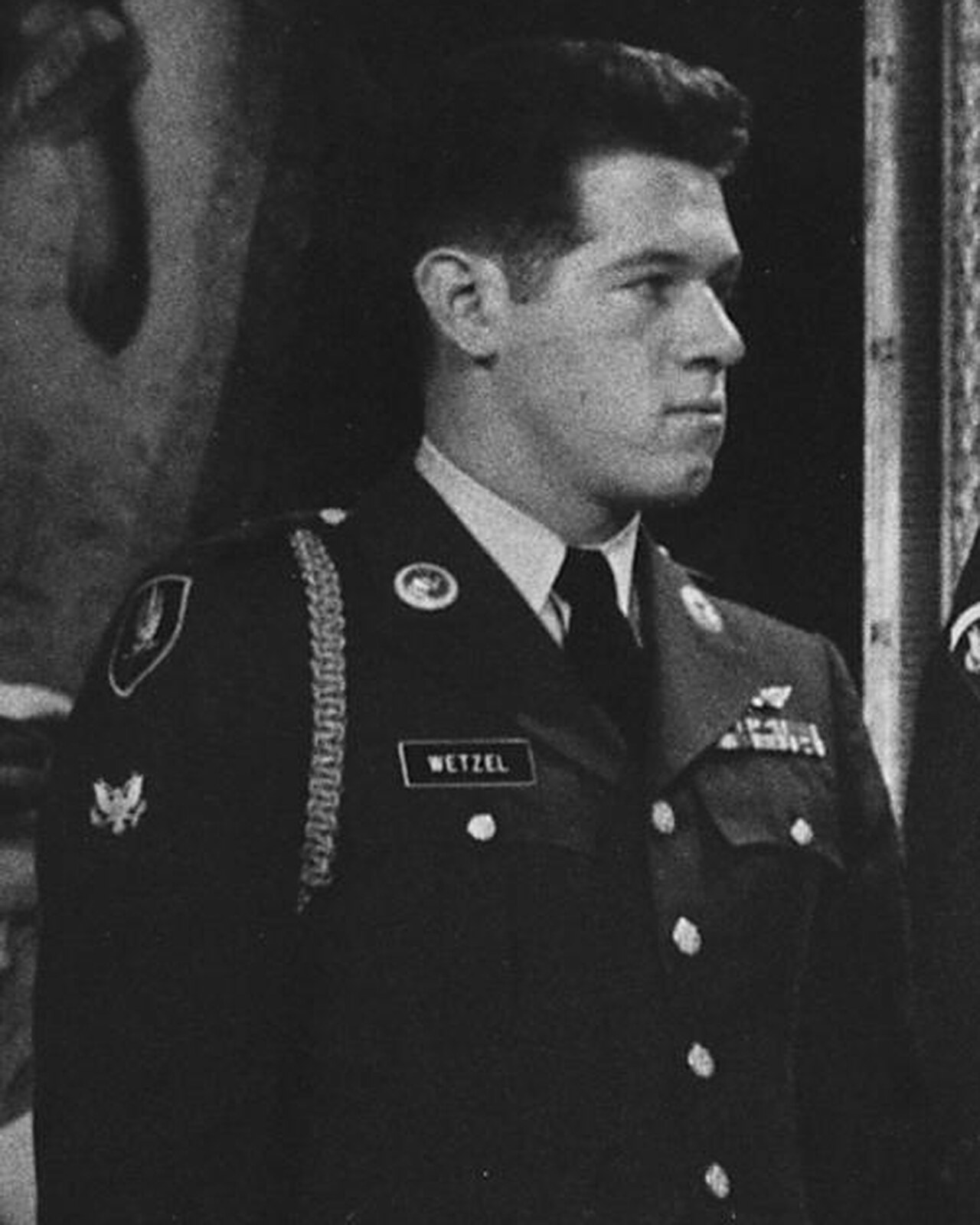
- Cap: No cap in this photo. The green uniform's service cap carries the same eagle on a disk.
- Collar: Brass disks again: “U.S.” on his right, his branch on his left.
- Buttons: Four brass eagle buttons down the green coat, plus one on each pocket.
- Sleeve: An eagle in place of chevrons: a specialist, a rank used from 1955. The patch on his right shoulder marks a unit he served with in a war; his current unit's patch goes on the left.
Compare one detail across the wars
Pick a detail to line it up from war to war. The caps alone tell the Civil War, World War I and World War II apart.
Caps
Civil War
WWI
WWII
Korea
Collars
Civil War
WWI
WWII
Korea
Vietnam
Sleeves
Civil War
WWI
WWII
Vietnam
Count the chevrons, then see which way they point
Rank sits on the sleeve, and the number of chevrons is the first thing to read. Curved bars under the chevrons, called rockers, mark the more senior sergeants.
- PrivateBare sleeve
- Private first classOne chevron, 1920 to 1968
- CorporalTwo
- SergeantThree
- TechnicianA T below, 1942 to 1948
- Before 1902Points down
Army chevrons pointed down from 1851 until 1902, according to the Naval History and Heritage Command. Stripes that point down put a photo before 1902: the Civil War, the frontier years or the Spanish-American War.
A T under the chevrons dates a photo to World War II or just after. An eagle worn in place of chevrons marks a specialist, like Gary Wetzel in the Vietnam photo above.
Restore it until the badges read, then check them against the scan
A faded or soft photo hides the small things you need: the letters on a disk, the count of chevrons. A restore can make them readable. It also rebuilds what it can't see, and a badge is small enough to be rebuilt wrong.
So restore a copy, set it beside the scan, and go through the four places one at a time. Trust a badge only if you can find it in the scan too, even as a blur.
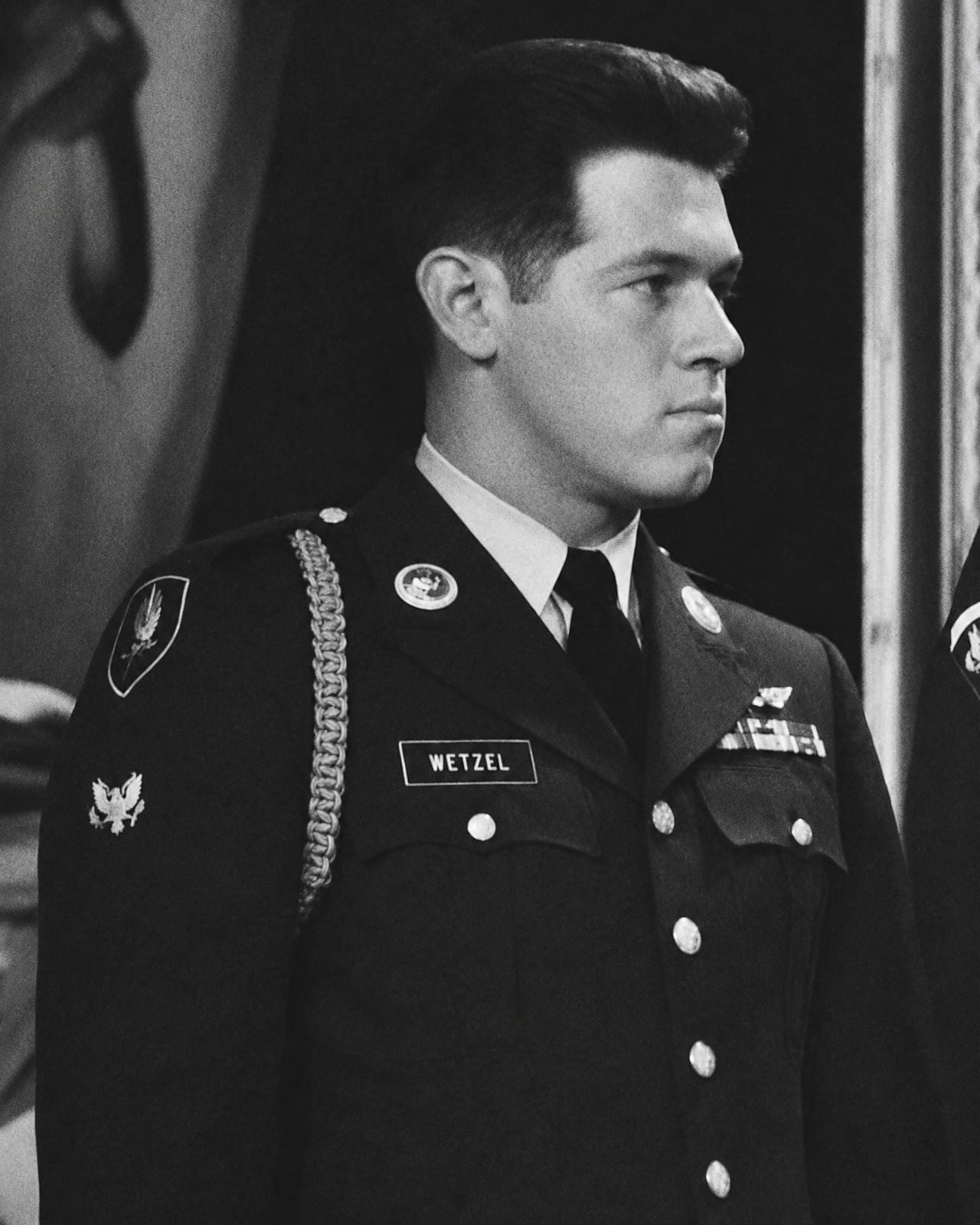
Drag the line to compare the scan with the restore.
Here the restore sharpened the eagle on Gary Wetzel's sleeve and the name on his plate, and both match the scan. The disk on his right collar should read U.S., but the scan holds only a blur, and the restore drew a seal there instead. His shoulder patch also came back with more detail than the scan can confirm.
When the scan does hold the badge, the restore keeps it. Sgt. D'Nichol's left collar disk shows crossed rifles before and after, and his right disk, soft in 1919, stays soft.
To see what a restore makes of the badges on yours, upload a scan: 2 free watermarked previews a day, no card needed, about a minute each.
Navy and Marines
A sailor's jumper has a wide square collar flap at the back and no buttons down the front. A petty officer's rank sits on the upper sleeve: an eagle, a small mark for his specialty, and chevrons that point down, a pattern the Navy has used since 1886.
Below petty officer, a sailor wore one to three stripes around the cuff of his jumper until shortly after World War II.
Marine chevrons have pointed up since 1836, so in a Civil War photo a Marine's stripes point the other way from a soldier's. The eagle, globe and anchor on a Marine's cap dates from 1868. From 1859 until then, Marines wore a horn with the letter M, so close to the Army's infantry horn that the Corps replaced it.
Work through your own photo
Knowing what the photo shows comes before anything else you do with it. To date the print itself, by its paper, border and mount, see how to date old photos.
A clear uniform portrait can interest collectors, so read are old photos worth anything before you clean or trim one. For how a faithful repair looks in each decade, see our before-and-after gallery.
- 01Scan the print flat, as in our guide to scanning at home, and keep that file as your reference.
- 02If any lettering reads backwards, flip the scan left to right.
- 03Restore a copy, then check each badge in it against the scan.
- 04Read the cap, collar, buttons and sleeve against the key above, and write down only what the scan confirms.
- 05Check the war, the branch and any unit number against his service record, if the family can get a copy.