
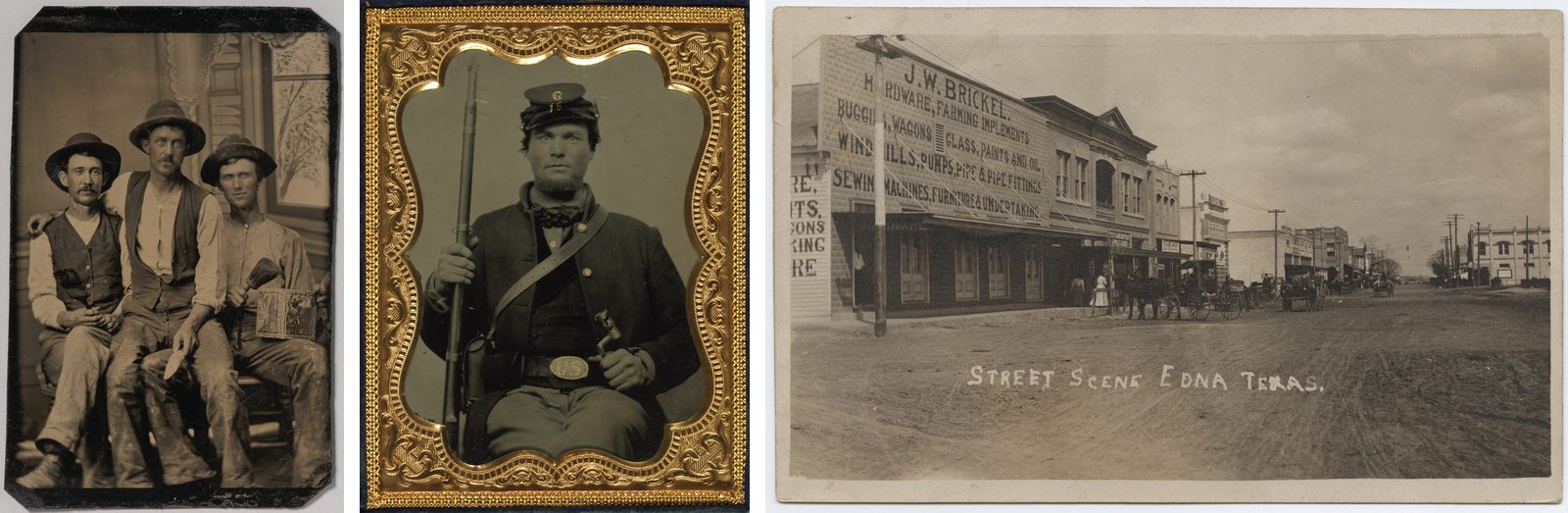
An old family portrait usually sells for very little, and for almost nothing once nobody remembers who is in it. The photos collectors pay for show more than a face: a person with a name, a trade, a town, an event, or a rare early process.
Age alone doesn't do it. So before you sell, clean or frame anything, work out what yours shows, and leave the original exactly as it is while you do.
What collectors pay for
Britannic Auctions, which sells historic photographs, lists what its buyers look for: occupations, transportation, military history, events, people and places that can be identified, and rare photographic formats.
A trade is the easiest to spot: painters with their brushes, a blacksmith with his hammer, a fireman in his helmet. Catalogs call these occupational portraits, like the painters at the top of this page.
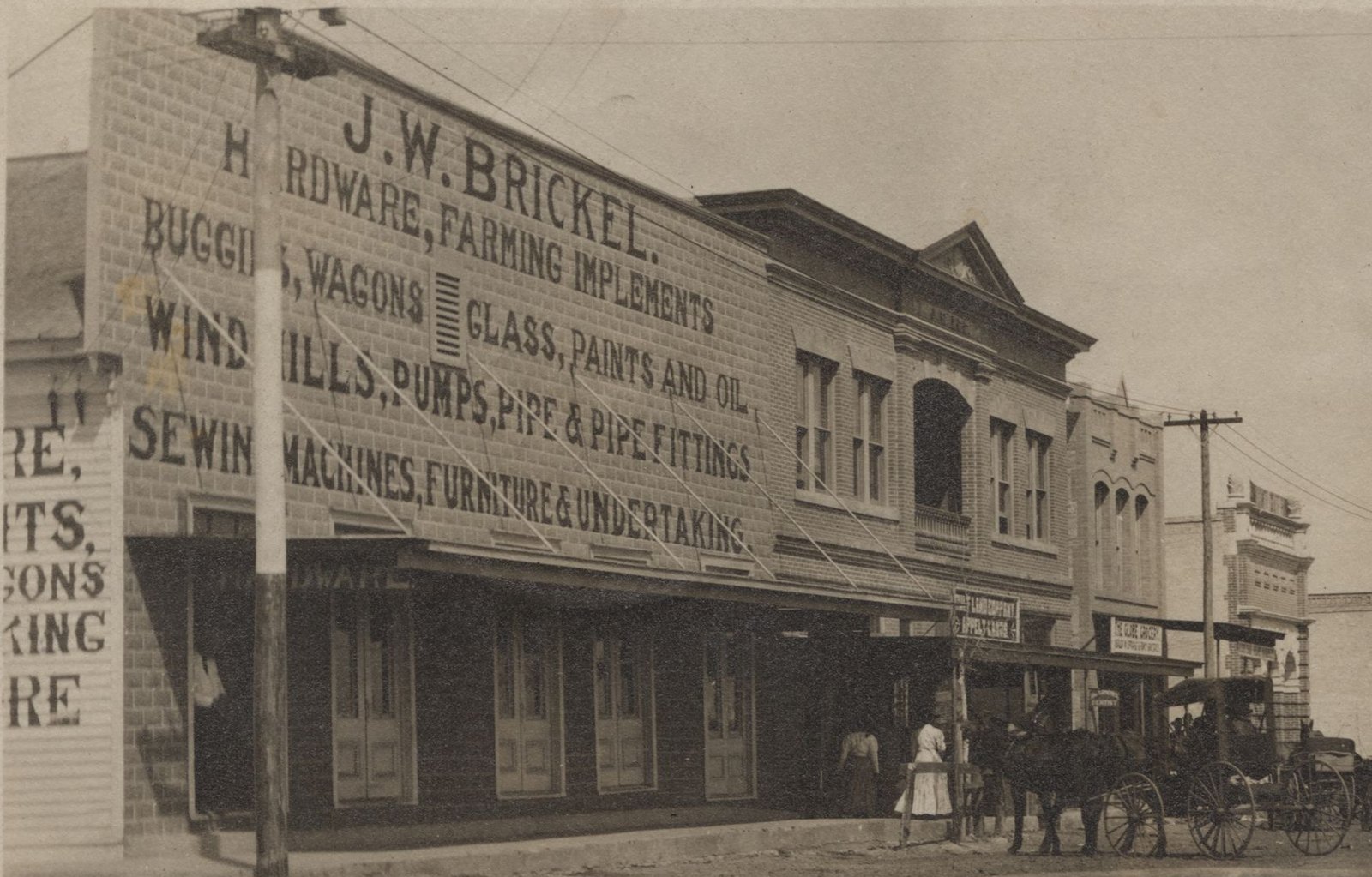
A place counts too: a main street, a storefront, a depot. Britannic's guide to photo postcards says small towns are “highly collected,” while views of big, famous cities are “typically extremely low in value.”
One 2021 sale had a trade, a name and an early process in a single plate: a daguerreotype of a San Francisco fireman from the 1850s, sold at Cowan's in Cincinnati that June.
A firefighting historian had read the initials on his fire hat and checked the company's records to name him: Walter Van Erven Dorens. It brought $31,250.
What rarely sells
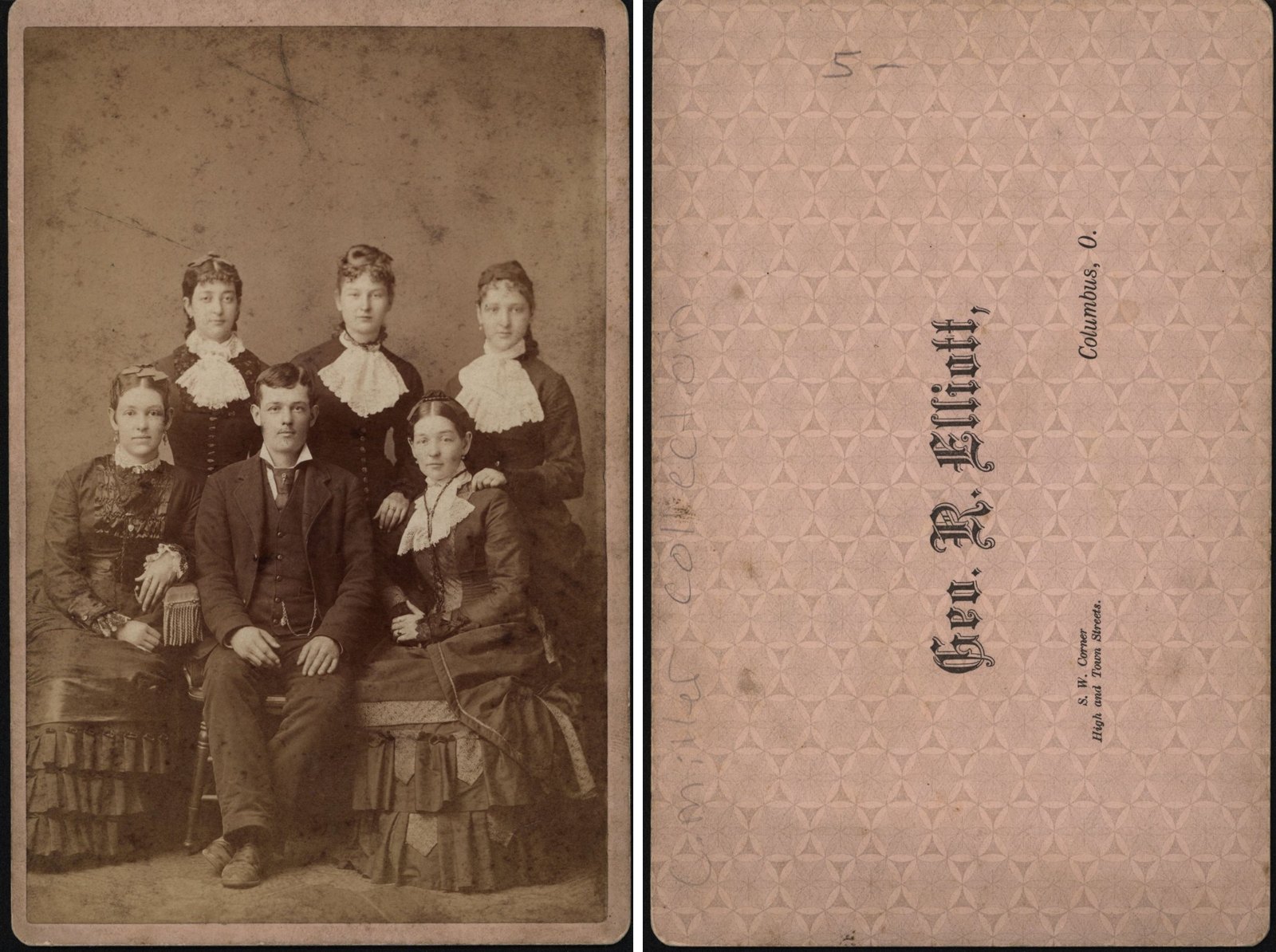
Britannic is blunt about the rest: family snapshots, wedding albums and “old cabinet cards showing people whose names have been lost to history will usually have little to no value at all.” Like this card: six people, a studio stamp on the back, and not one name.
Soldiers are no exception unless something sets them apart. The same postcard guide calls photo postcards of ordinary people, families, children and soldiers very common.
In October 2025, eight cased Civil War tintypes, most of them Union soldiers and only one with a name, sold together at Fleischer's for $600 before fees, about $75 a portrait.
A name changes it
A name turns a face into a person someone can look up. The postcard guide says identified people and places are “more desirable than mysterious, unidentified images,” and the clues are often on the photo itself.
The soldier in the middle of the photo at the top of this page came to the Library of Congress without a name. In 2011 the editor of Civil War Times saw him in an exhibition there, took the clues on the plate to a database of Civil War soldiers and found him: Horace H. Smith, Company G, 16th Wisconsin Infantry.
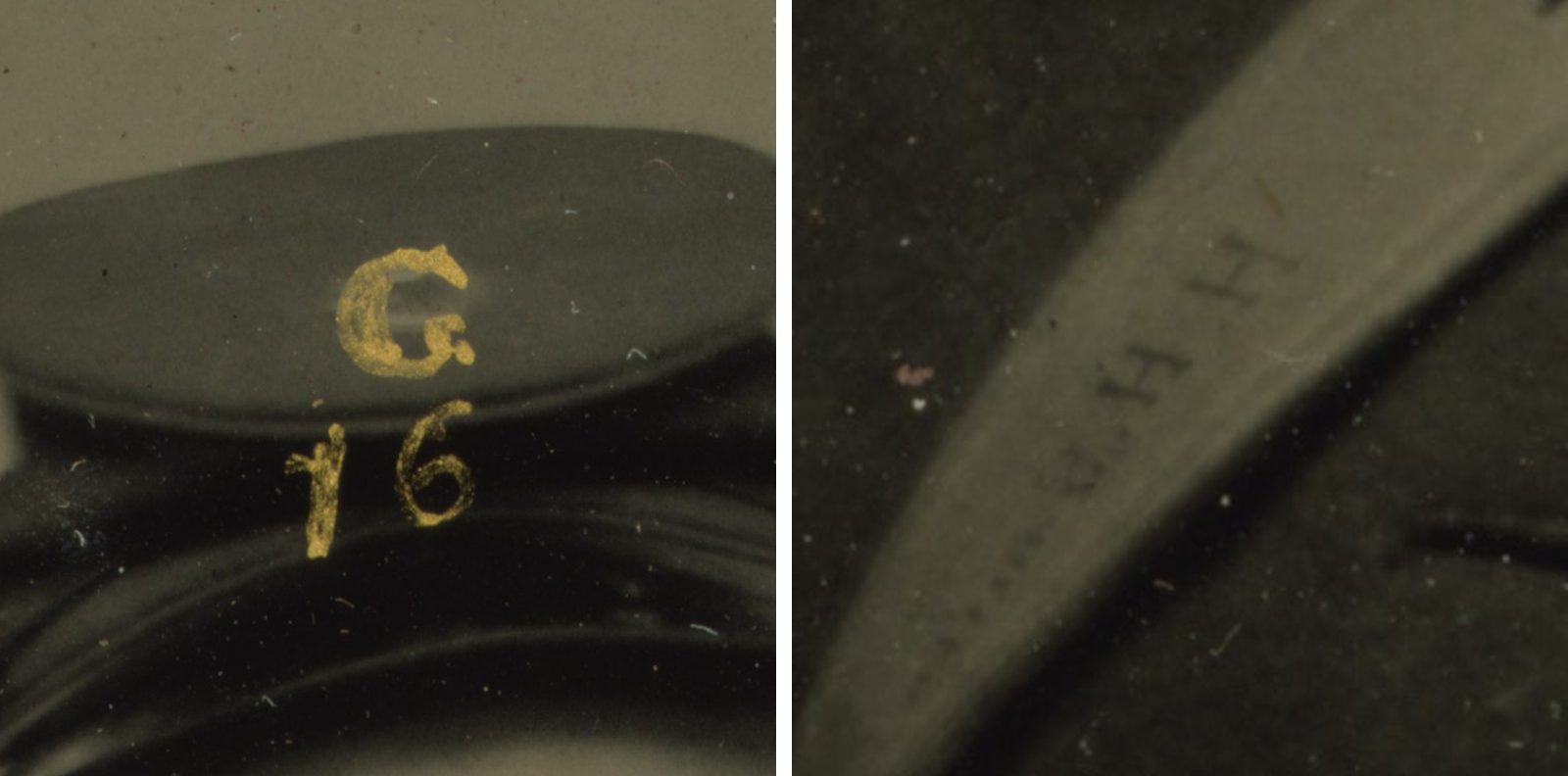
Look for these on yours before you decide anything:
- Writing on the back of a card mount, or a note slipped into a case. Look without taking a cased image apart.
- Letters and numbers on a cap, a collar or a belt plate. Our guide to military uniforms shows how to read them.
- The studio's name and town printed on the mount, which help date it and narrow where to search records; see how to date old photos.
- Family letters, a Bible record, or the relative who gave it to you.
Keep what you find with the photo, written on its sleeve or on a card in the same envelope.
Check sold prices, then ask an auction house
Look up what similar photos sold for, not what sellers are asking. On eBay, turn on the Sold Items filter and find ones that match yours on subject, format and condition. An asking price is only what a seller hopes to get.
If yours shows a name, a trade, a town or an early process, ask an auction house that sells historic photographs. Send pictures of the front and back. Britannic, for one, gives a free evaluation with no obligation to consign.
Leave the original as it is
Whatever you decide, don't try to improve the original first. The National Park Service's conservation notes say not to trim photographs, even when the backing is acidic, not to pull prints off their mounts, and not to clean the glass of a cased image without a conservator.
Cleaning leaves marks a buyer can see. In that Fleischer's lot, the catalog noted that one tintype had “undergone abrasive cleaning, resulting in an overall streaky, smeared look.”
Damage it already has is less of a problem. Britannic notes that scratches, fading and cracked cases don't automatically end a collector's interest.
If a photo you might sell needs treatment, that's a job for a photograph conservator. For family prints you'll keep, how to clean old photos covers what's safe at home.
If you want a damaged photo to look whole again, repair a scan of it. The fix happens on the copy, and the print stays exactly as you found it.
Sell it or keep it
If you sell, the buyer is paying for the original as it is, with its mount, its case and whatever is written on the back. Scan both sides before it goes, so the family keeps the picture.
If it's an ordinary family portrait, its value is to your family: the people who know who they were, or want to find out. Keep it, and make a copy for the frame and the relatives.
That copy is where a restore belongs. FixFade repairs tears, stains, scratches and fading on the scan and never touches the print, so nothing a collector would pay for changes.
Try it on yours: 2 free watermarked previews a day, no card needed, about a minute each. A printable copy without the watermark costs 1 credit; packs start at $19 for 25.
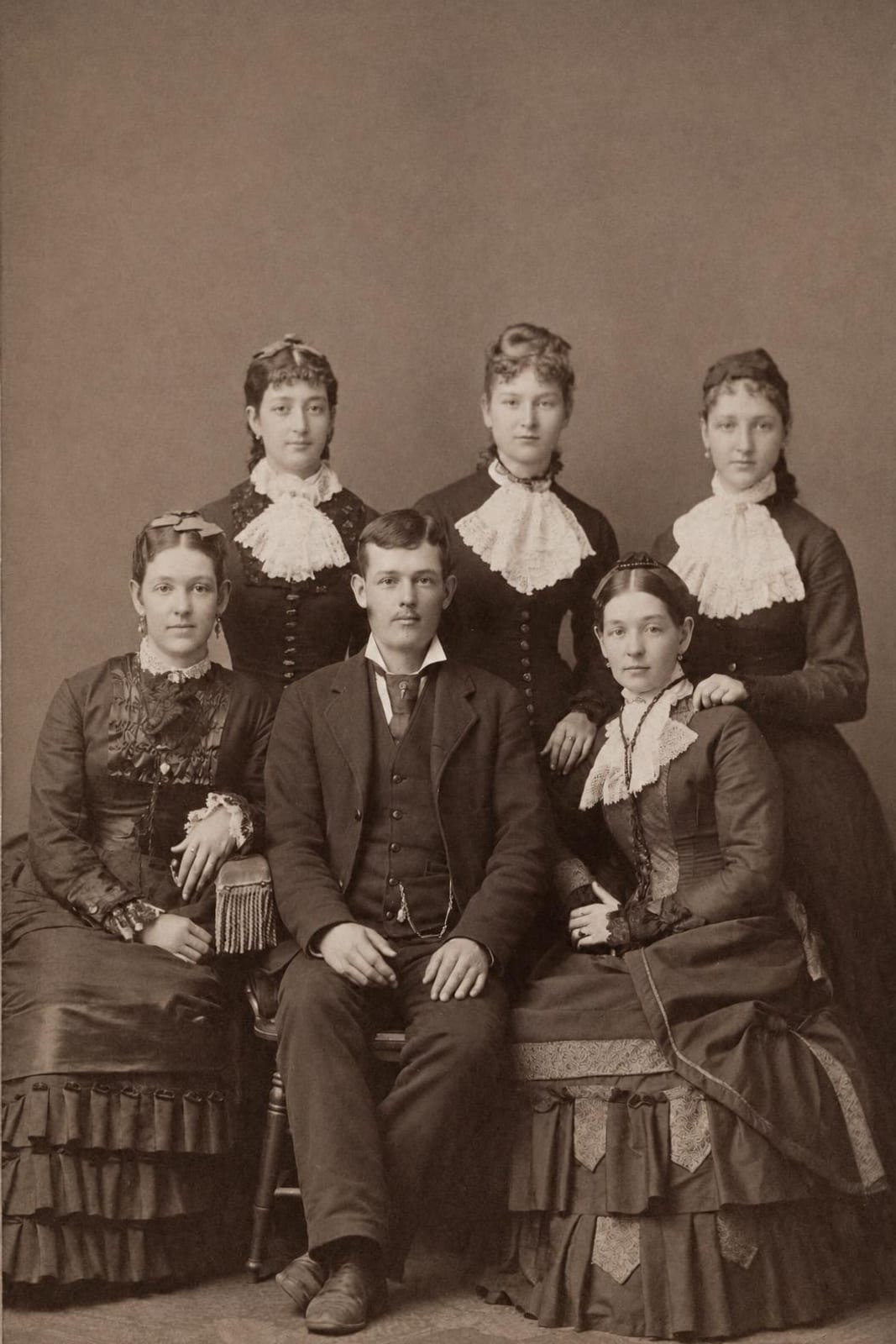
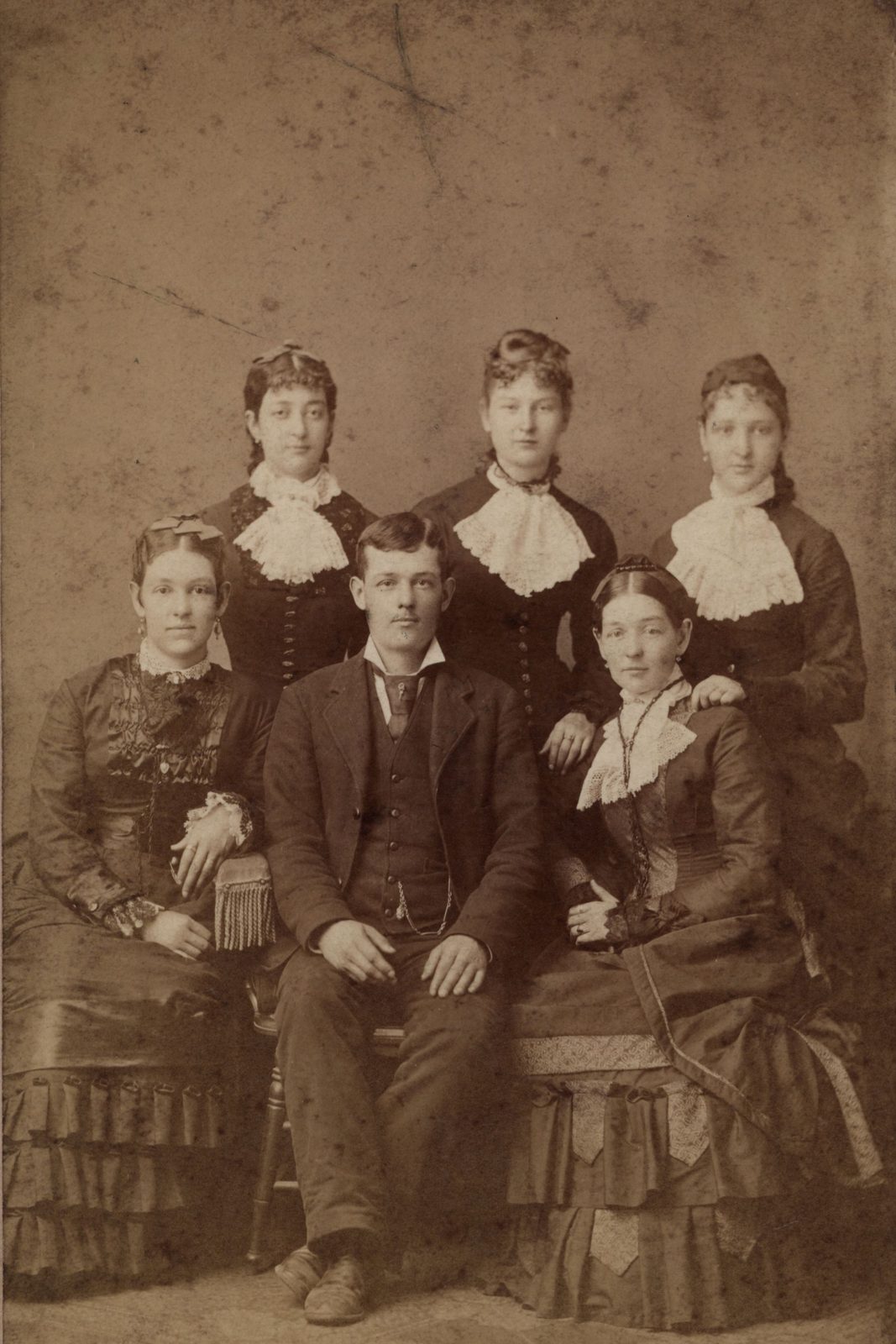
Drag the line to compare the scan with the restore.
Then check the faces against the card. On this one the restore smoothed the lines on the seated woman at right, so she looks younger than she does on the original.