
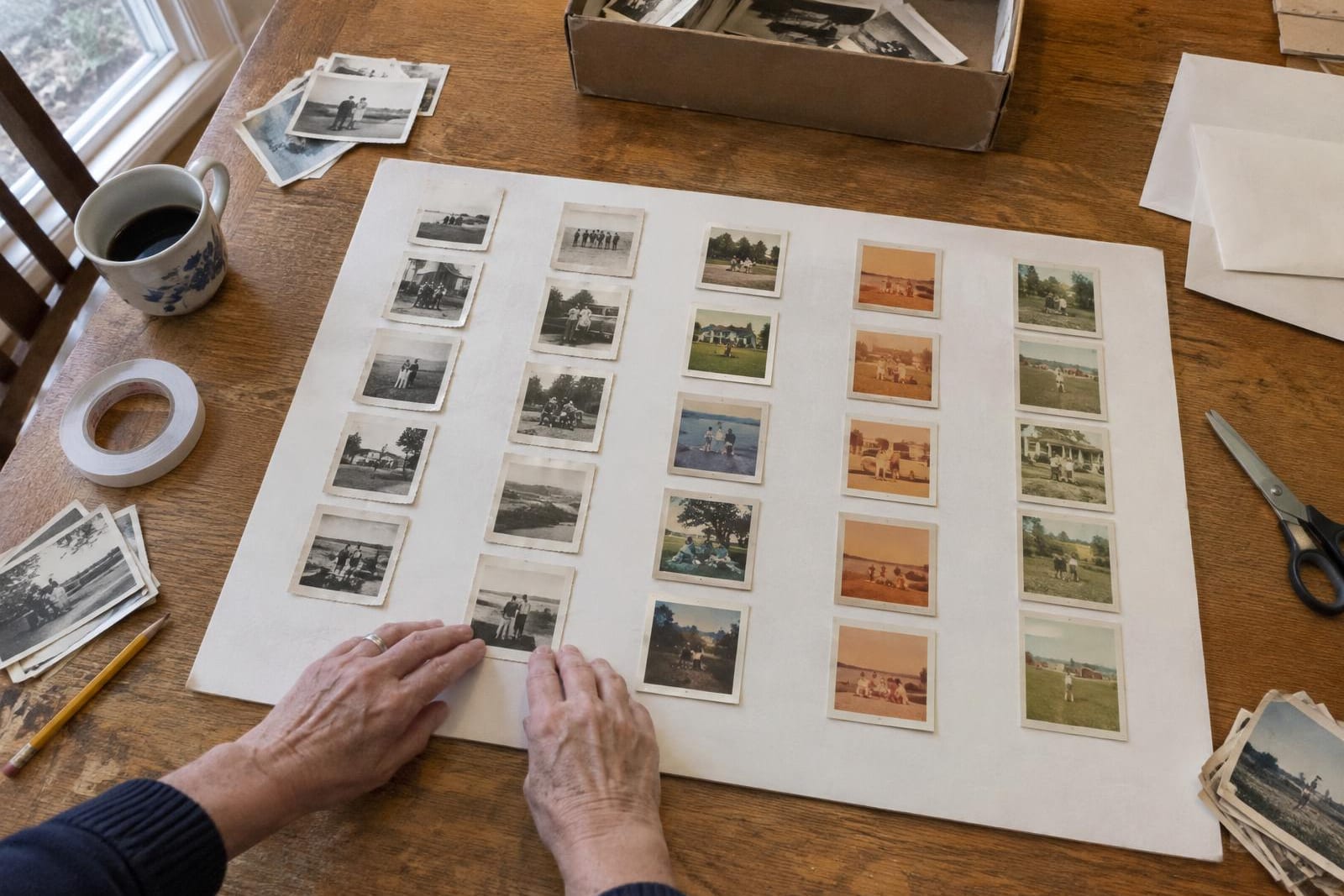
If the photos for the service are your job, lay them out by decade, from the earliest photo to the latest, on boards, an easel and a table. Put copies on display, keep the originals at home, and repair only the two to five photos people will look at up close.
Choose boards, an easel or a table
Start by asking the funeral home whether it has easels and a table you can use, and how early you can set up.
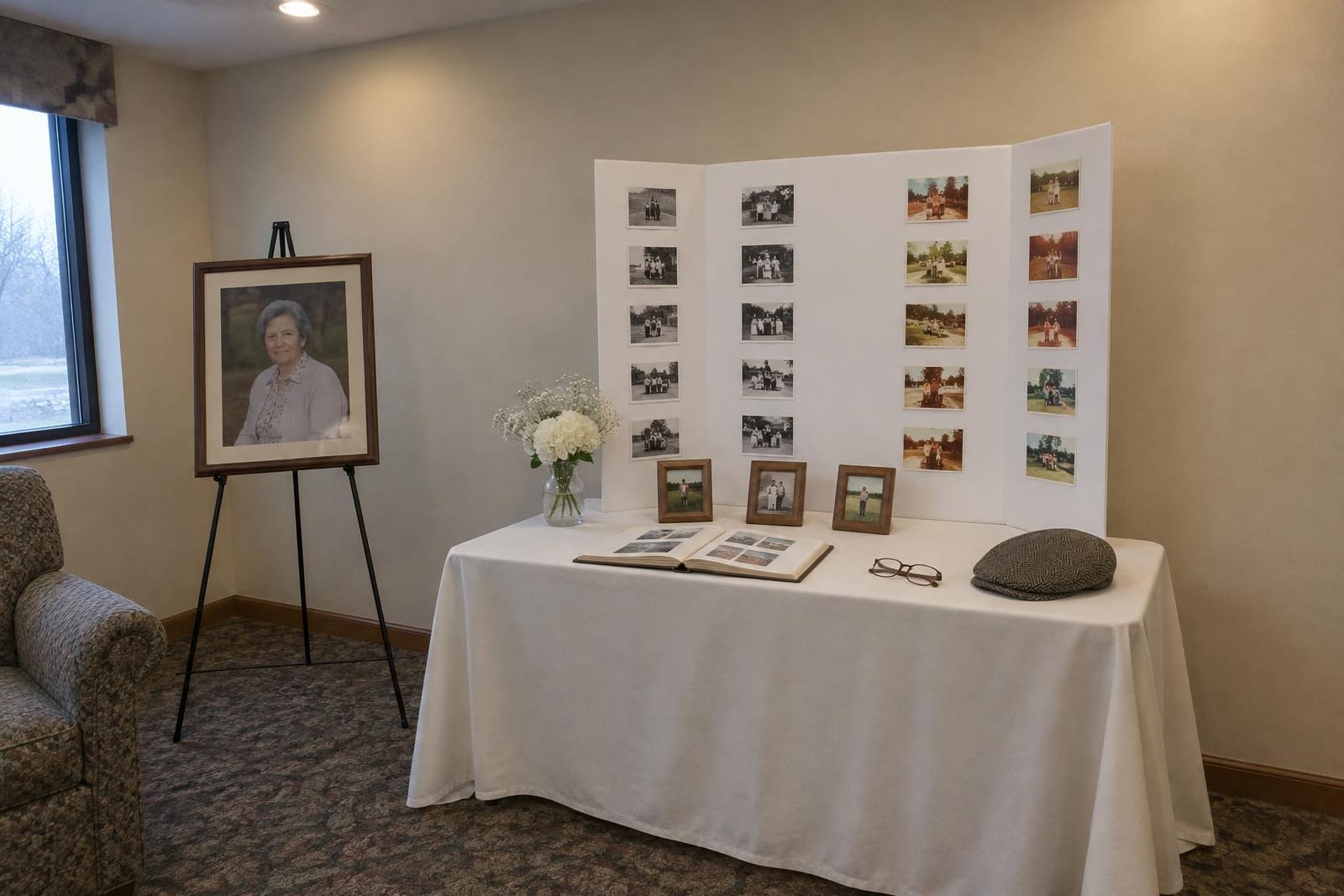
Boards hold most of the photos. A 20 by 30 inch foam board from a craft store needs an easel or a wall to lean on. A 36 by 48 inch tri-fold, the kind sold for school projects, stands on a table by itself and folds to half its width for the car.
An easel takes one large portrait. Put it where people come in, so it's the first photo they see.
A table takes framed photos, an open album and a few things that were theirs: reading glasses, a cap, a tool, a recipe card in their handwriting. A digital photo frame on the table can show the scans that didn't fit on a board.
Sort the photos by decade
Give each decade its own column, oldest on the left. Read left to right, the board tells the life in order, and a school friend or a coworker can find the years they shared.
Gather everything first, then sort it into one envelope per decade with the decade written on the front. When a print has no date, ask an older relative to place it, or make your best guess and move on.
Then choose three to five from each decade. Pick photos where the face is clear from a step back, and include friends, neighbors and coworkers as well as family.
One tri-fold holds eight decades this way, with four upright 4 by 6 prints in each column, so plan on 32 prints per board.
Put copies on display and keep the originals at home
On the day, the boards get taped, handled by many people and packed into somebody's car at the end. An original can tear coming off a board, and one left behind may not come back.
Copies can be trimmed and taped without a second thought, and afterward they can go home with whoever wants them. Frame copies for the table too, and keep the originals together in one box at home, away from the attic and basement.
To make copies, scan each print or photograph it flat with your phone (the setup is in how to scan old photos at home), then order 4 by 6 or 5 by 7 prints at a drugstore or big-box photo counter.
Repair only the photos people see up close
A board doesn't need every photo repaired. People read it from a step back, and at that distance a faded snapshot or a chipped corner doesn't stand out.
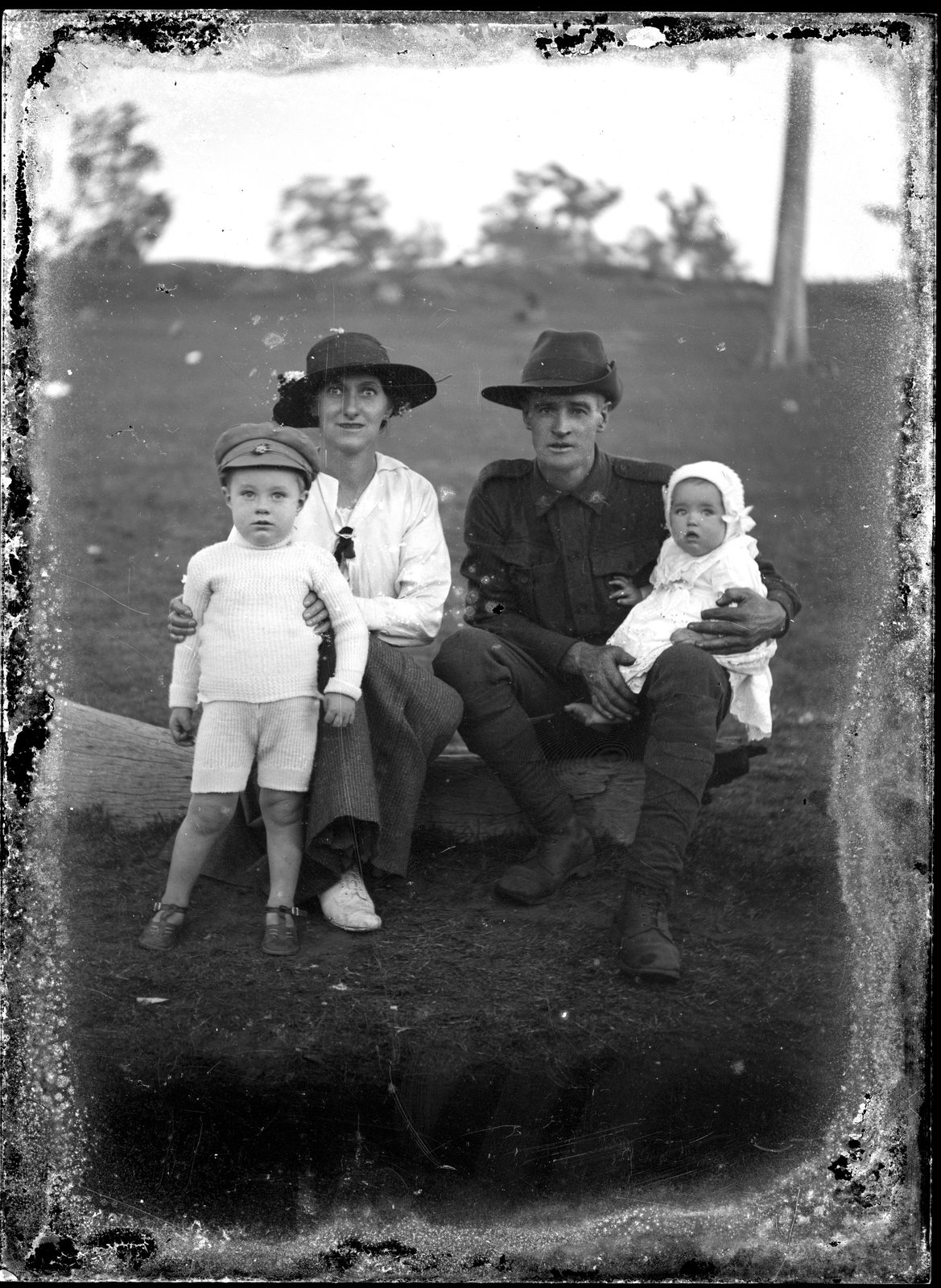
Repair the ones they stand close to: the easel portrait, the framed photos on the table, and any print where a crease, a crack or a stain runs across a face. Expect two to five.
Damage around the edges can stay. Crop it off the copy when you order the print, and leave the original as it is.
Give the easel portrait the most care
The easel portrait is printed larger than anything else, and every spot and crack on it is enlarged with it. Repair it first, then check the repair against the print.
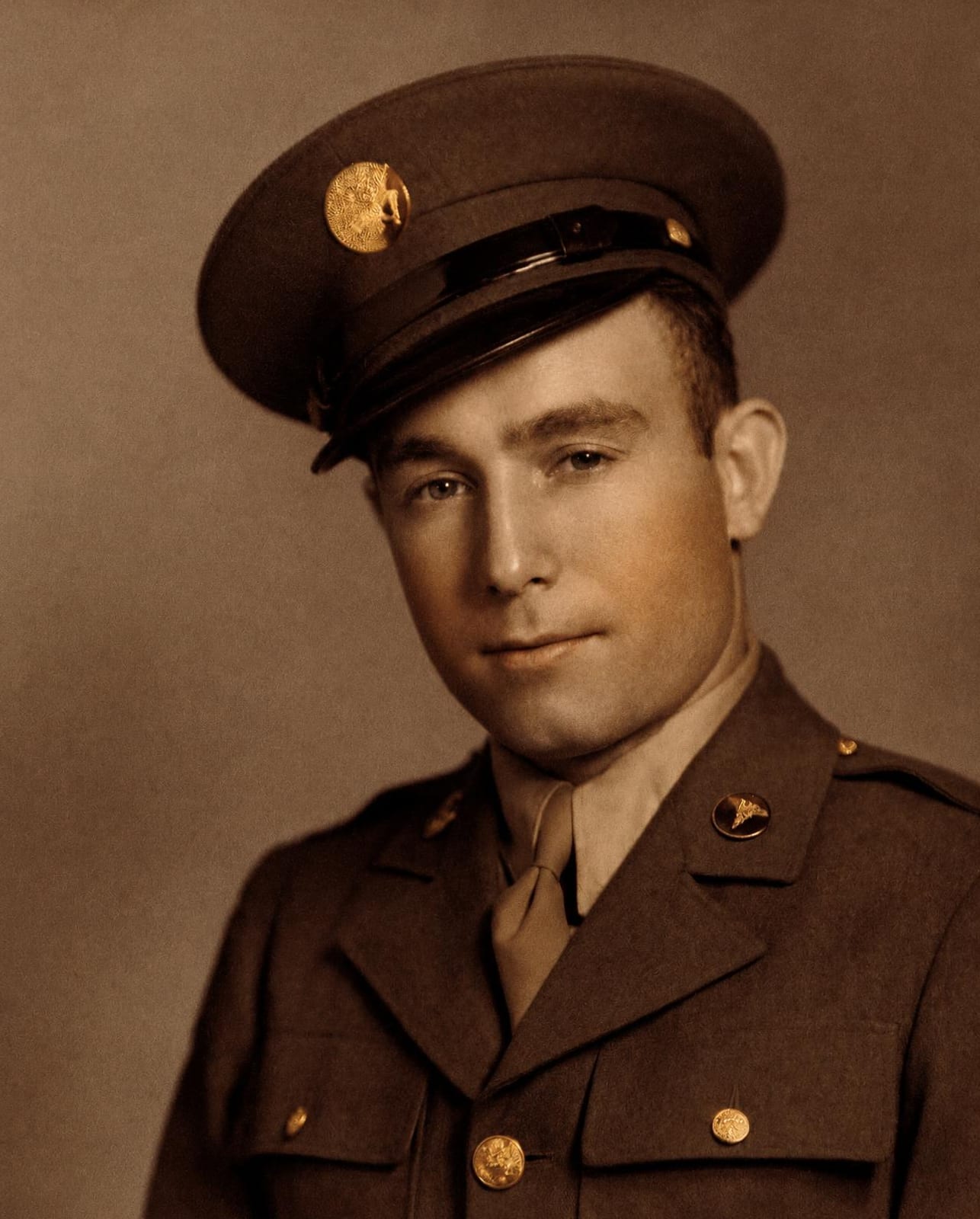
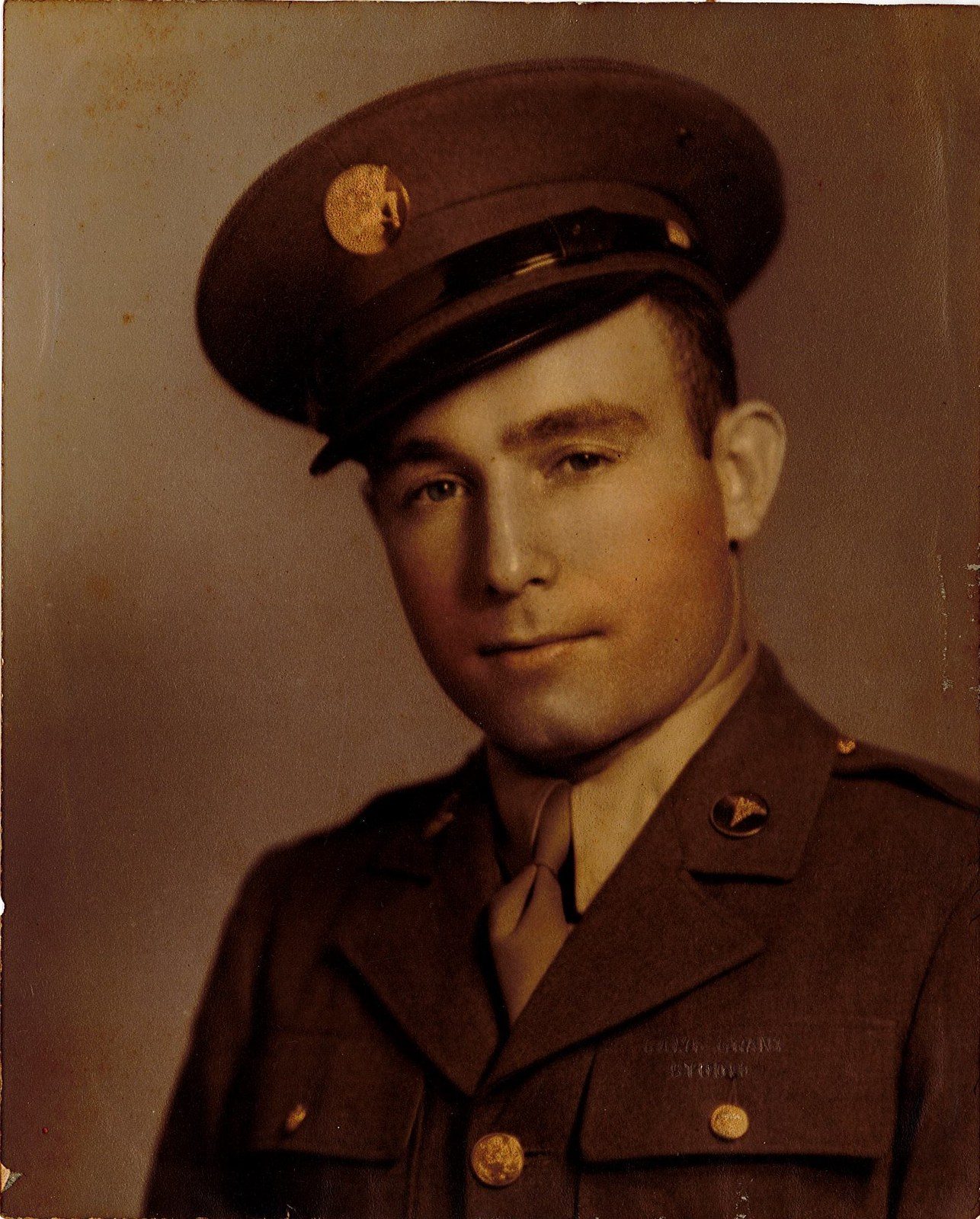
Drag the line to compare the print with the repair.
Look for what changed besides the damage. In this repair the foxing and chipped edges are gone, but the face also came out lighter and less orange than the print, and the studio's name, embossed over his pocket, disappeared with the spots.
Before you order the large print, put the repaired face next to the original and compare the eyes, mouth, hairline, skin tone and anything people knew them by. Where the damage hid part of the face, the repair guessed, so ask a relative to look too.
FixFade does this repair in your phone's browser in about a minute, with nothing to install. You get 2 free watermarked previews a day, no card needed, enough to try the easel portrait and one more first.
The prints you order need a paid restore, which drops the watermark and comes back as a 2K PNG in the photo's own proportions. The smallest pack is $19 for 25 photos, 76¢ each, paid once. Before you order the easel print, ask the counter whether the file suits the size you want.
The obituary photo is a separate job, a small head-and-shoulders crop; obituary photo size covers it.
Before the service
- Choose one person to collect the originals. They keep a list of who lent what, and return each lender's prints in an envelope with that person's name on it.
- On the back of each copy, write who's in it, the year, and whose print it came from, so the copies can be shared out afterward.
- Lay each board out loose, take a phone photo of the layout, then fix the copies down with double-sided tape.
- Pack tape, scissors, a few spare copies and a soft cloth for the frame glass.
- Decide who takes the boards and the frames home afterward.