
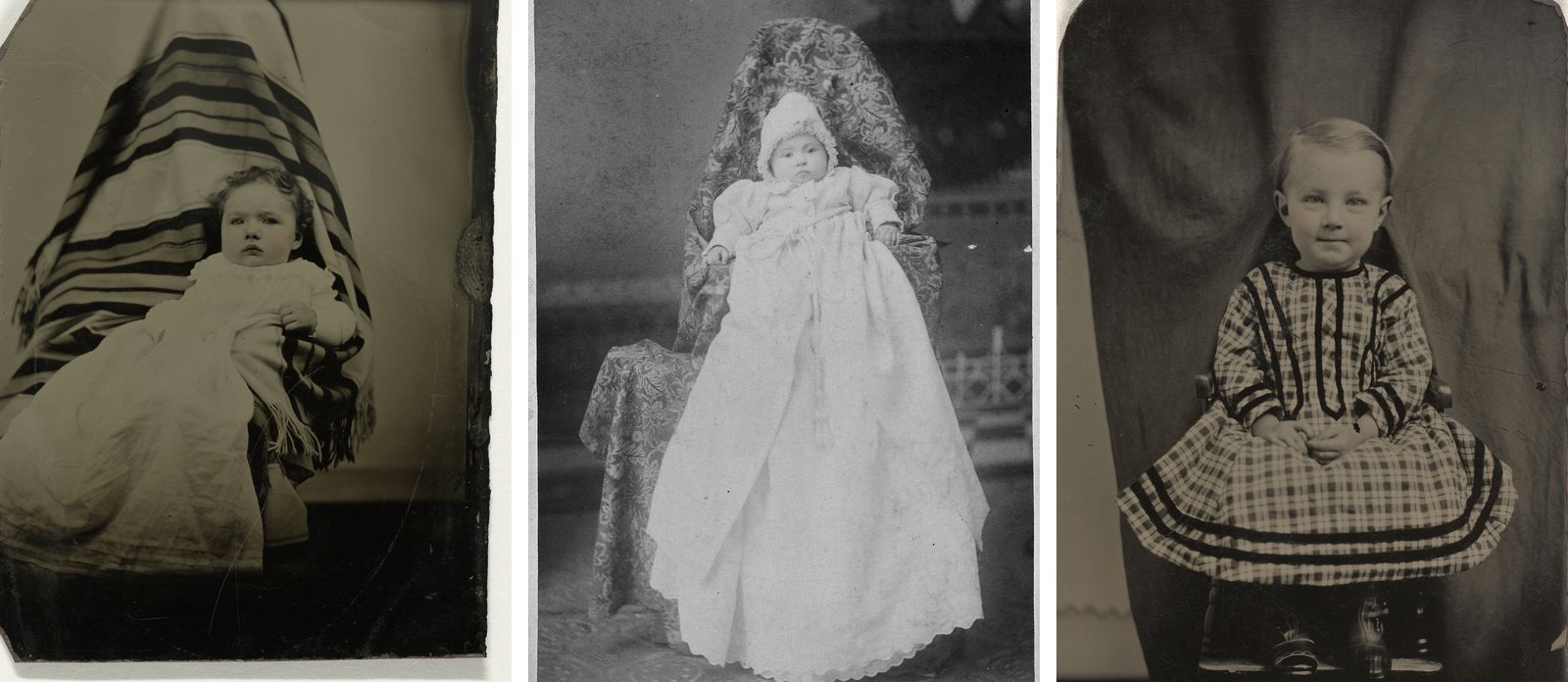
The draped figure in an old baby portrait is a person, most often the baby's mother. She sat under a shawl or behind a curtain and held her child steady while the plate was exposed.
If you have one, restore it with her in. If you want a copy without her, make that a separate edit and keep both.
Why the mother is under the shawl
A tintype took around five seconds to expose, by the Davis Museum's account, and a baby won't stay put that long. Adults leaned on posing stands, but those didn't suit a small, wriggling child. So the photographer enlisted the mother, hidden by studio props, to hold or soothe her baby, as the Palmer Museum of Art describes it.
In most of these portraits the baby is alive: the mother was there because the child wouldn't keep still. If someone has told you yours shows a child who had died, the drape alone doesn't make it one.
You'll find the trick on daguerreotypes, tintypes, cartes de visite and cabinet cards; to work out which kind you have, see how to date old photos. The unsmiling faces have their own history: why didn't people smile in old photos.
How to spot a hidden mother
The three photos at the top of this page show the usual disguises. Look for these:
- A shape under a cloth behind or beneath the baby, about the size of a seated adult, with a head and shoulders under the fabric.
- A curtain that drops in a tent shape right behind the child, or a chair with an open back and something dark behind it.
- A hand or a sleeve at the baby's waist or at the edge of the picture, with nobody attached.
- A scraped or retouched patch beside the baby, where a studio took her off the negative.
The mount could hide her too. Many of these portraits sat under an oval mat that showed the baby and cut off the outline of the figure holding it. The striped-shawl tintype at the top of this page has a faint curved line near its lower right corner, most likely where its mat once sat.
If yours is still in a mat or a paper sleeve, the rest of her may be under it. Slide a sleeve off only if it comes away freely, and leave a sealed case shut: scan it as it is.
A tintype is a thin iron plate with a varnished face. If the varnish is flaking, don't touch the plate before you scan it; what's safe to do otherwise is in how to clean old photos.
Then scan it like any small print: 600 DPI, with the scanner's automatic fixes off, as our guide to scanning at home explains.
Restore it with her in
The drape shows that someone held this child that day, most likely her mother. A restore that takes her out changes what the photo records.
A faithful restore repairs the scratches, rust and tarnish and leaves the people and props where they were, so she stays. That's what FixFade does by default, and a black-and-white photo stays black and white. Upload a scan of yours to see her kept: 2 free watermarked previews a day, no card needed.
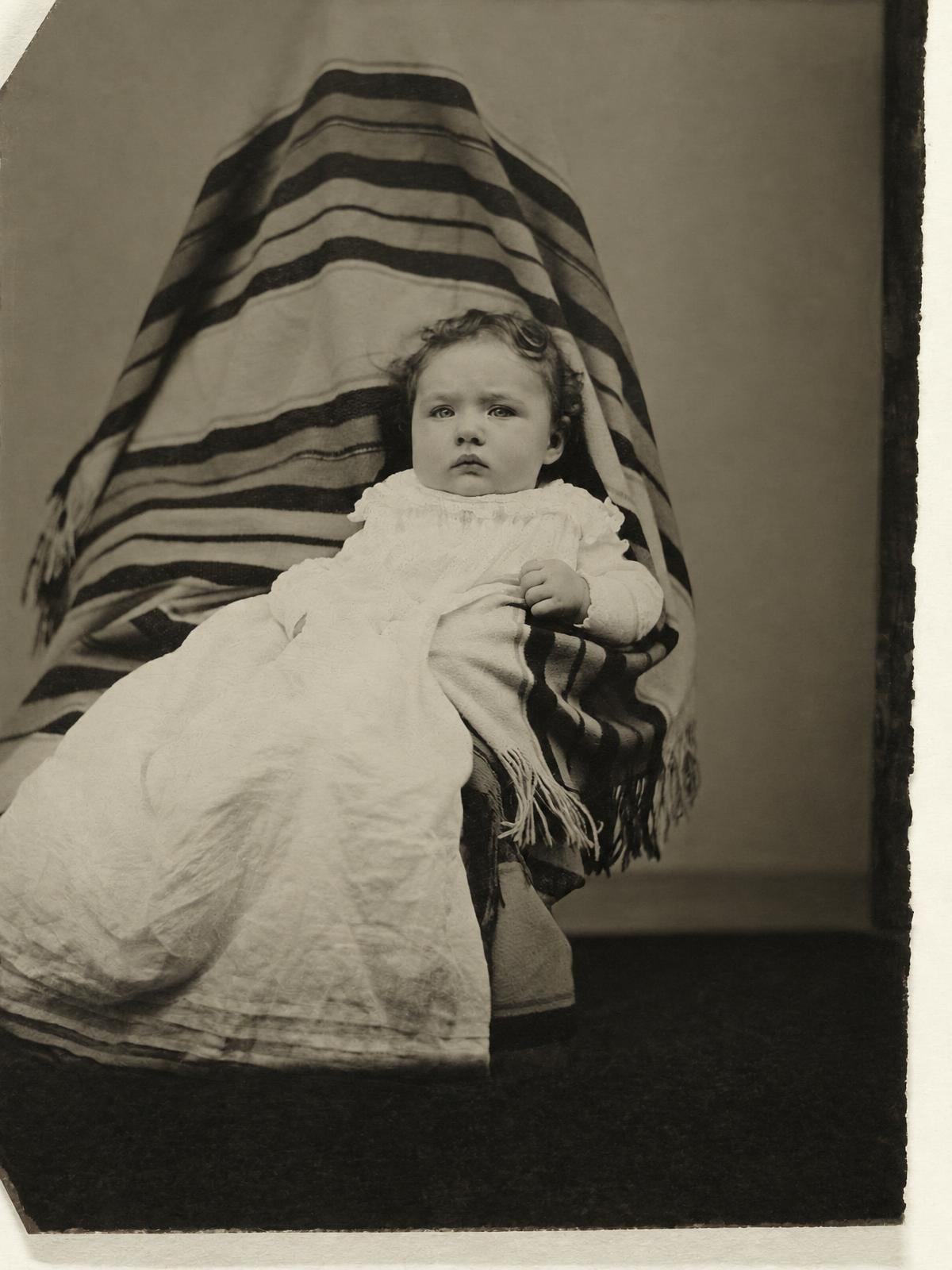
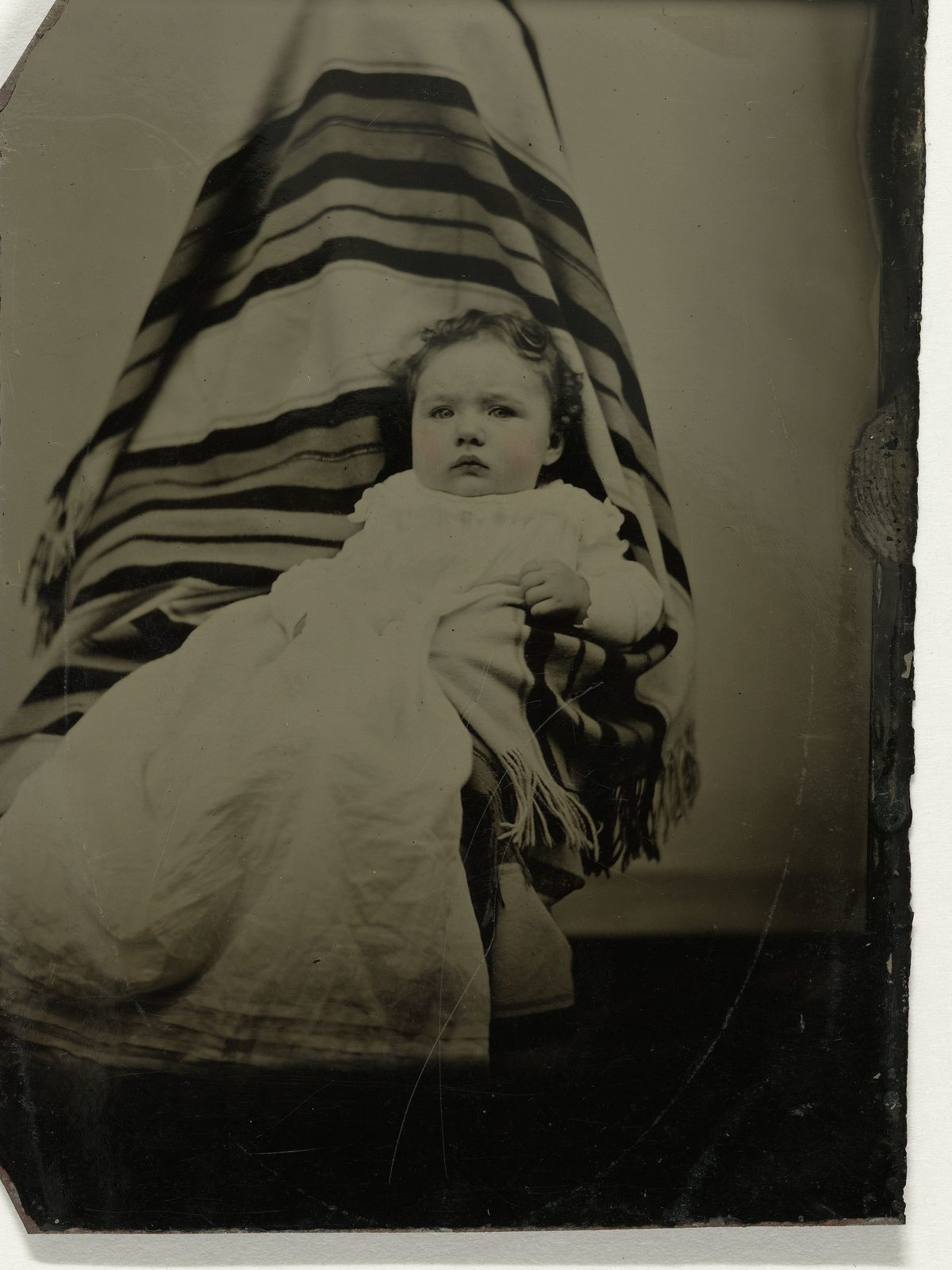
Drag the line to compare the scan with the restore.
Then compare the face with the original. On this tintype the restore dropped the pink tint on the cheeks and pulled the brow into a slight frown she doesn't have on the plate.
A crack or rust patch across the drape is the easy case: the restore fills it with more cloth. Damage across the baby's eyes or mouth is filled with a guess, so check those against the print.
When you share the restore with family, add a line saying what the drape is, such as “held by her mother, under the shawl”, so nobody has to guess.
If you want her out, make it a second copy
If you'd like a copy with less of the drape, for a frame or a family tree, start with a crop. Trim close around the baby, the way an oval mat did, and most of the cloth goes without anything being invented. Your phone's photo editor can do it.
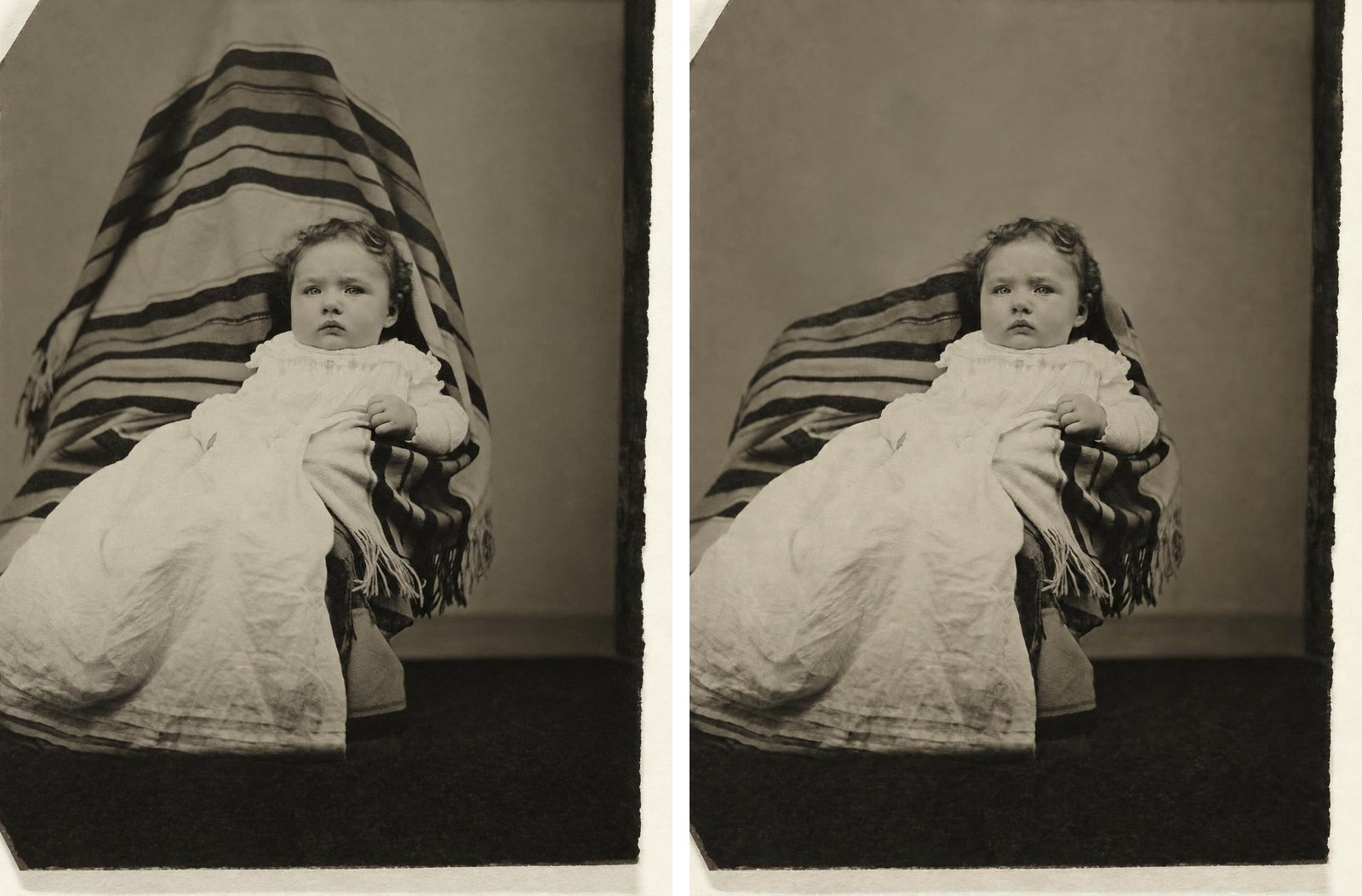
To take her out completely, make it a separate edit. On FixFade that's a Touch-up: you type the change, something like “remove the draped figure; keep the baby and chair exactly as they are”, and only that changes. It costs 1 credit and needs an account; credits come in packs, from $19 for 25.
Removing her means inventing what she hid. In the edit below, the backdrop and the seat under the girl are guesses, and she now sits with nobody holding her.
Keep three files, and name them so nobody mixes them up later:
- The original scan, untouched.
- The restore with her in, the copy you share.
- The edit, with “edited” in the file name, and in the caption if you post it.